3 Cooking Methods Every Griller Should Know
Nearly everything that comes off a grill is cooked one of three ways. Master direct grilling, the three-zone fire and indirect grilling, and you can cook anything from a fish fillet to a whole brisket with confidence. These fundamentals are expanded with practical detail.
1. Direct Grilling
Direct grilling is cooking right over the fire. It suits meats that are relatively thin and tender, letting them cook quickly and evenly: steaks, burgers, sliced vegetables and fish fillets. Direct grilling is generally done over medium to medium-high heat.
The charcoal method: after the coals turn ashy white, spread them evenly across the bottom of the grill, set the grate in place, and cook with the food directly above the heat. Keep the session short - direct heat is a searing tool, not a roasting tool, and anything thicker than about an inch risks charring outside before it cooks through.
2. Three-Zone Grilling
A more sophisticated form of direct grilling, used to regulate heat on a charcoal grill. Rake half the coals into a double layer on one side of the grill - that's the high-heat zone for searing. Rake the remaining coals into a single layer across the center for a moderate zone. Leave the remaining area without coals for a low-heat zone.
The payoff is control. Sear over the double layer, finish over the single layer, and park anything that's cooking too fast - or a flare-up-prone fatty cut - over the empty zone. Once you grill with three zones you will never go back to one undifferentiated bed of coals.
3. Indirect Grilling
Indirect grilling turns the grill into a barbecue pit or oven-like environment. Use it for tougher meats, larger cuts, whole birds, racks of ribs, beef briskets and legs of lamb - anything that needs time for heat to penetrate and connective tissue to soften.
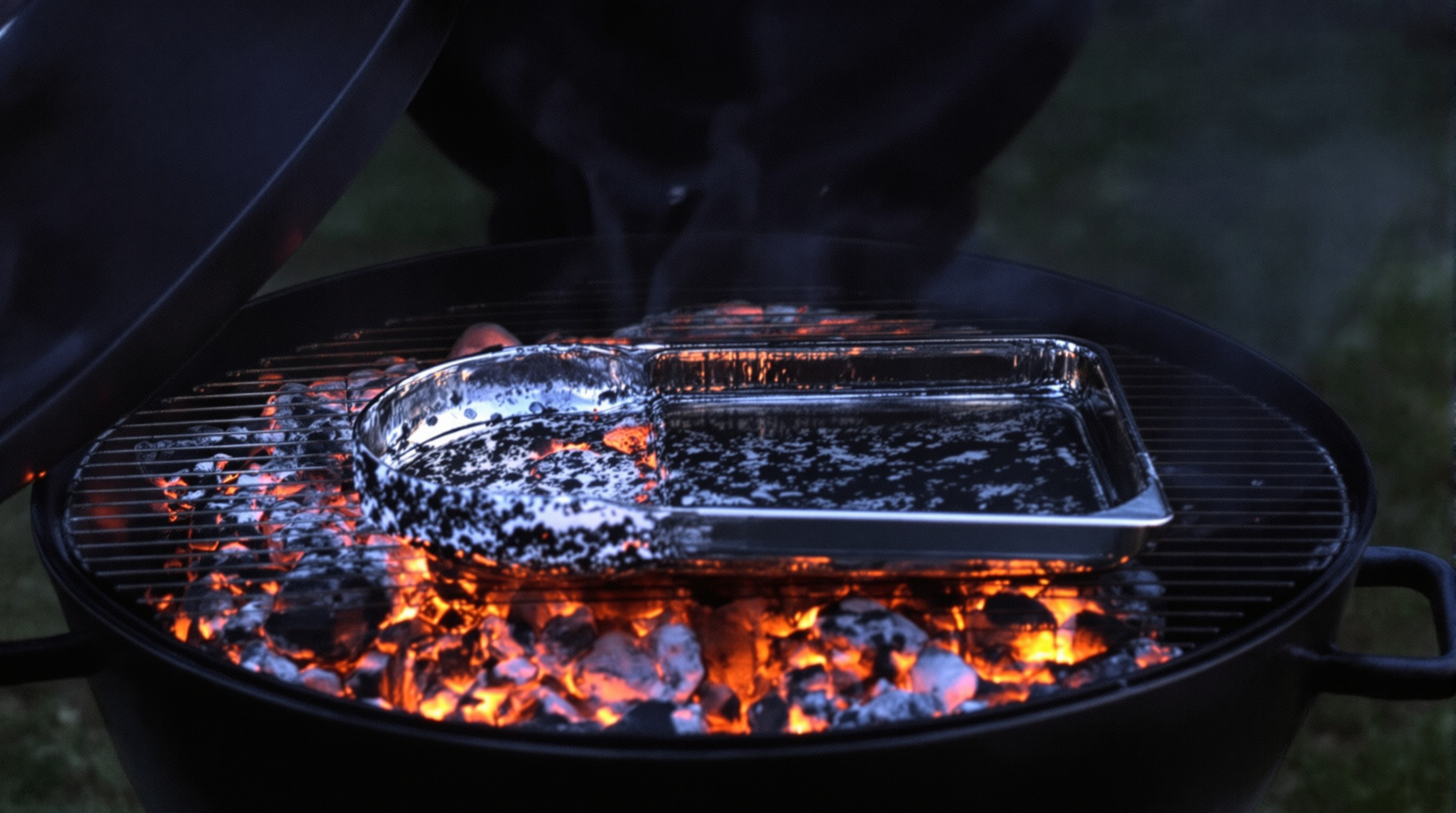
Charcoal: rake the hot coals into two piles at opposite sides of the grill and place a foil drip pan between them. If you're using wood chips, toss them on the coals. Set the grate, put the food in the center over the drip pan, and cover the grill, aiming to hold 325-350°F. Add coals as needed to keep the fire stoked, and use a meat thermometer to judge doneness - on long cooks, appearance lies and temperature doesn't, a point the USDA barbecue food safety guidance hammers home.
Gas: light one burner, or the two outside burners, and place the meat opposite the lit burner or centered between them. Lid closed; resist peeking.
Putting It Together
Choose the method from the cut: thin and tender goes direct, thick and tough goes indirect, and a mixed grill wants three zones. Then dial in your fire with the hand-count temperature gauge, check the cooking time charts, and pick something worthy from the recipe collection.