The Smart Alternative to Scouring Pads and Harsh Chemical Cleaners
The household family of foamed-glass blocks brings the same recycled-glass abrasive indoors - sized for sinks, stovetops, tubs, toilets and the grimy jobs waiting in the garage. The original manufacturer's benchmark: cleans five times faster than the leading scouring pads, with one block lasting as long as twenty of them.
Kitchen Block
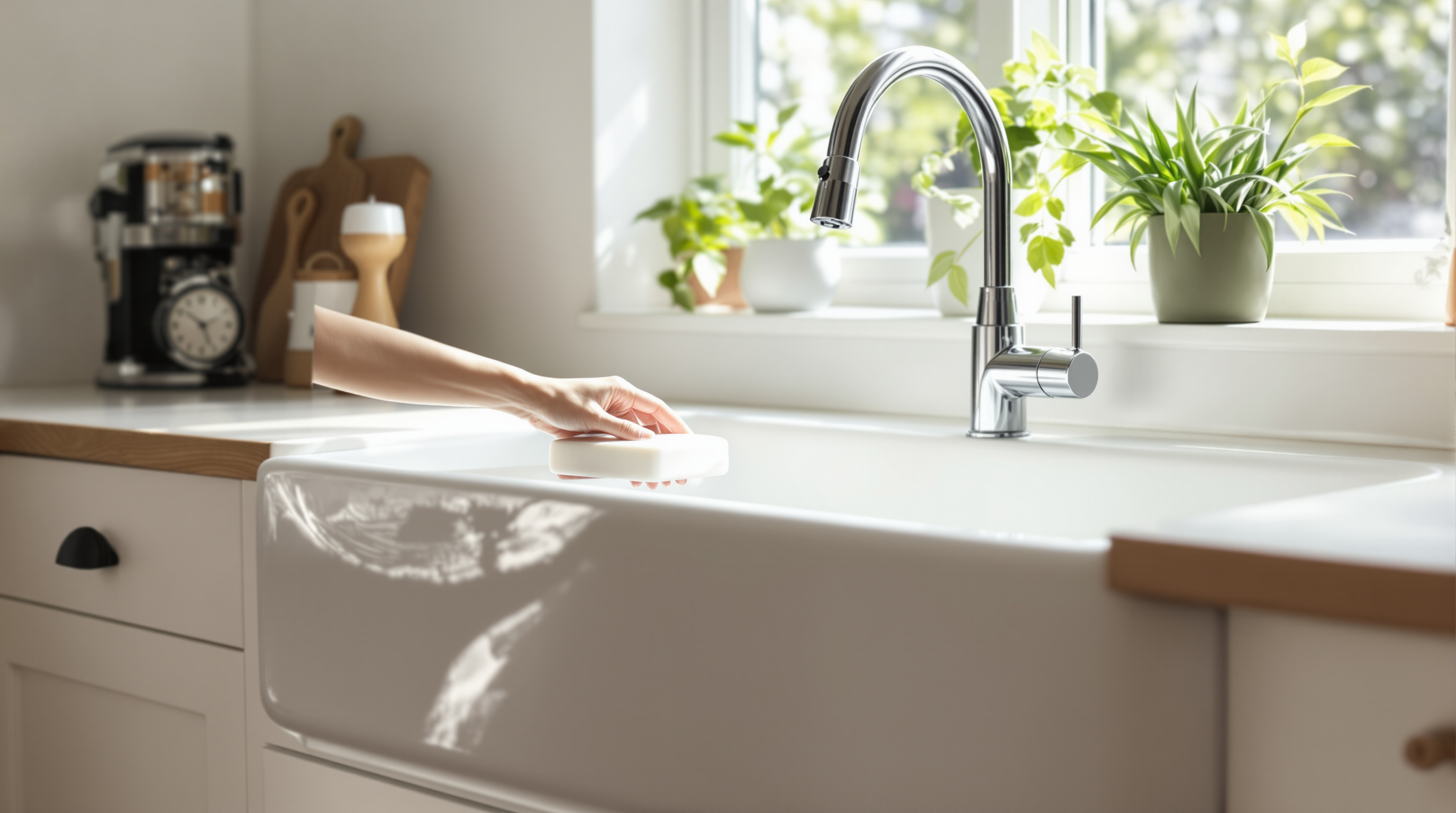
Made for the burnt-on end of kitchen cleanup: baked-on food on enameled cookware and oven interiors, scorched broiler pans, stained stovetops and porcelain sinks. It outperforms steel wool and conventional scouring pads, will not scratch glass cookware, and is gentle enough for countertops when used wet and flat. Because the block is chemical-free, there are no fumes around food-prep surfaces and nothing to rinse off but loosened soil.
Bath Block
Use it like a sponge on mildew stains, soap scum, and hard-water rings. It is a revolutionary way to clean tile and grout, porcelain sinks and toilets, conforming to grout lines to lift mildew staining where it lodges deepest. For context on dealing with mold and mildew at the source - moisture - see the EPA's mold cleanup guidance; the block handles the cosmetic staining that remains after the underlying problem is fixed.
Heavy-Duty Block
The coarse member of the family, for patio and garage chores: rust and mildew on garden tools, oil and dried paint spills on garage floors, scale and paint build-up on iron fences and patio furniture. Jobs that would eat a scouring pad in minutes barely register on a heavy-duty block.
Why Skip the Chemical Cleansers?
Bleach-based scrubs work partly by masking stains rather than removing deposits; an abrasive block physically lifts the deposit itself. There are no fumes, no gloves required, and nothing going down the drain except what you scrubbed off. The blocks are non-toxic and safe around kids and pets - a meaningful difference in bathrooms and kitchens, where chemical residues end up on skin and dishes.
Technique notes - including which surfaces want a wet block and a light touch - are on the usage tips page, with field reports under user experiences. For the full product map, return to the guide.