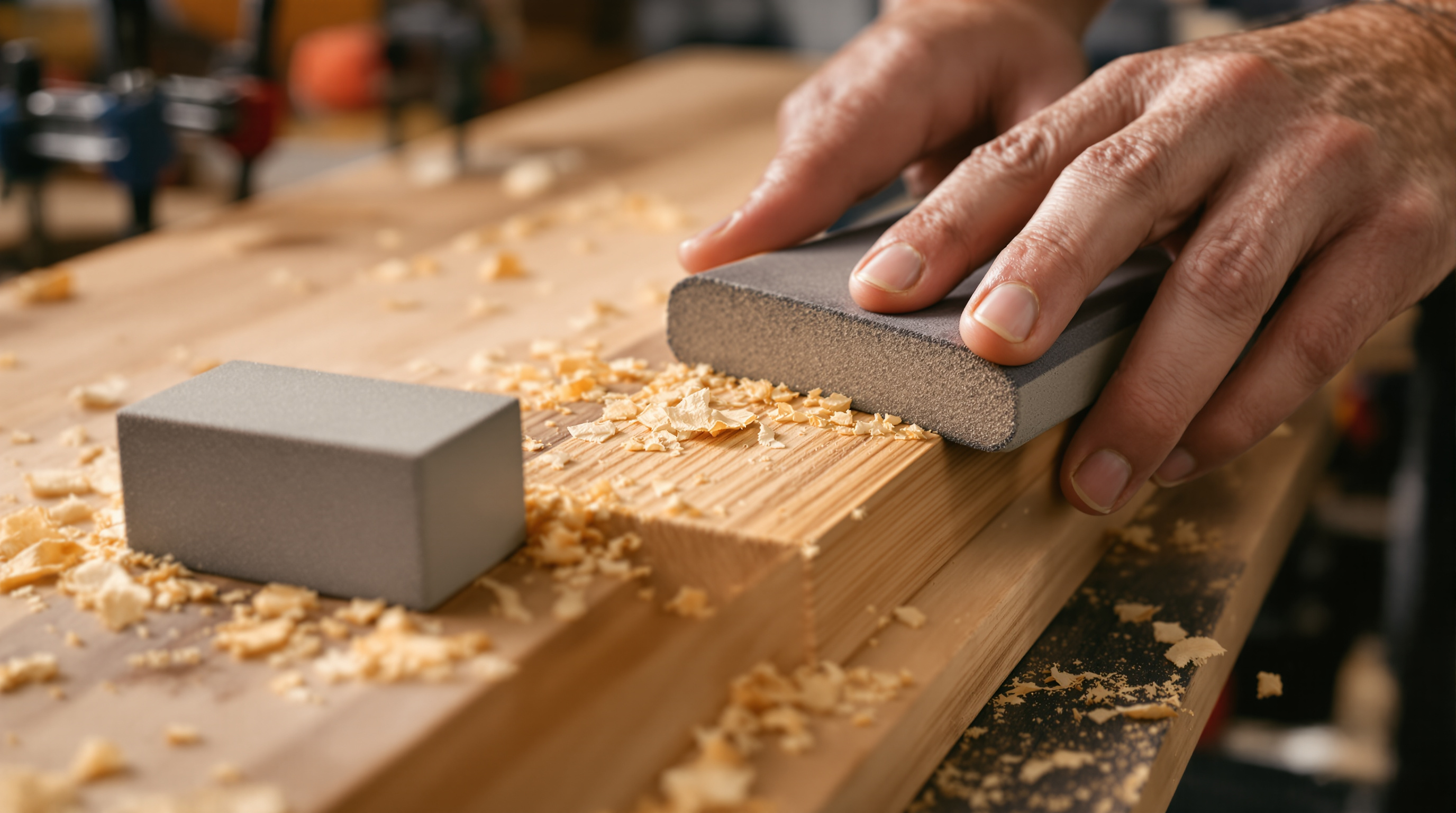
Making Sandpaper Obsolete
The hand sanding block is foamed recycled glass shaped for tough surface preparation. It works faster and more easily than sandpaper or sanding sponges, outlasts both by a wide margin, and shrugs off the hazards that destroy paper - it won't tear, won't catch on nails, screws, splinters or corners, and it won't clog.
Four Blocks for Four Jobs
- Rough Wood - sands and smooths rough lumber and prepares it for paint or stain. On gnarly stock it is easier to control than a hand plane and far faster than paper.
- Painted Surfaces - strips paint and varnish without chemical strippers. Faster, cleaner, safer surface prep for repainting.
- Rusted Metal - strips rust and scale and prepares metal for priming. One block equals roughly 25 quarter-sheets of sandpaper, and it keeps cutting long after paper would have glazed over.
- Drywall - smooths and feathers joint compound and removes wallpaper glue without the instant clogging that ruins sanding sponges and screens - while creating less airborne dust.
Why Glass Foam Beats Paper
Sandpaper is a single layer of grit on a backing: when the grit dulls or the surface loads with paint, the sheet is finished. A foamed-glass block is abrasive through its entire thickness. As cells wear away, new sharp edges are exposed - the block self-sharpens until it is used up. The open-pore structure also gives dust somewhere to go, which is why the block resists clogging on resinous paint and soft drywall compound alike.
Dust Sense
Less airborne dust is a real advantage of dense abrasive blocks over paper, but "less" is not "none." For any extended sanding - especially drywall compound or old finishes - work in ventilated space and wear an appropriate respirator; NIOSH guidance on respirable dust explains why fine particulates deserve respect regardless of source. And on pre-1978 painted surfaces, assume lead until proven otherwise.
Hand technique - stroke direction, pressure, and how to let the block shape itself to moldings - is covered in the usage tips, with woodworkers' notes under user experiences. Need machine speed? Step up to the power-sander blocks.