Grill Fire Safety: What the Fire Statistics Say
Grilling safety reaches beyond the cooking grate. Where the grill stands, how it is lit, what collects below it and what happens to the coals afterward all deserve attention. The National Fire Protection Association (NFPA) pairs its fire statistics with practical guidance for the routine before, during and after a cook.
When Grill Fires Happen
NFPA's figures use 2020-2024 annual averages. July was the peak month for grill fires, at 15%; June also accounted for 15%, followed by May at 13% and August at 11%. The matching July and June percentages are the figures NFPA reports, so there is no need to read a larger difference into them.
Gas grills were involved in an average of 9,235 home fires per year during that period. That total included 4,662 structure fires and 4,573 outdoor fires annually. The distinction matters: a grill fire can involve a building, but the home-fire total also includes outdoor fires.
NFPA also cites Consumer Product Safety Commission data showing an average of 21,682 emergency-room patients per year with grill-related injuries in 2020-2024. That is a grill-injury figure, rather than a count limited to people injured in the fires above. It should not be treated as a fire-only total.
The Dirty-Grate Problem
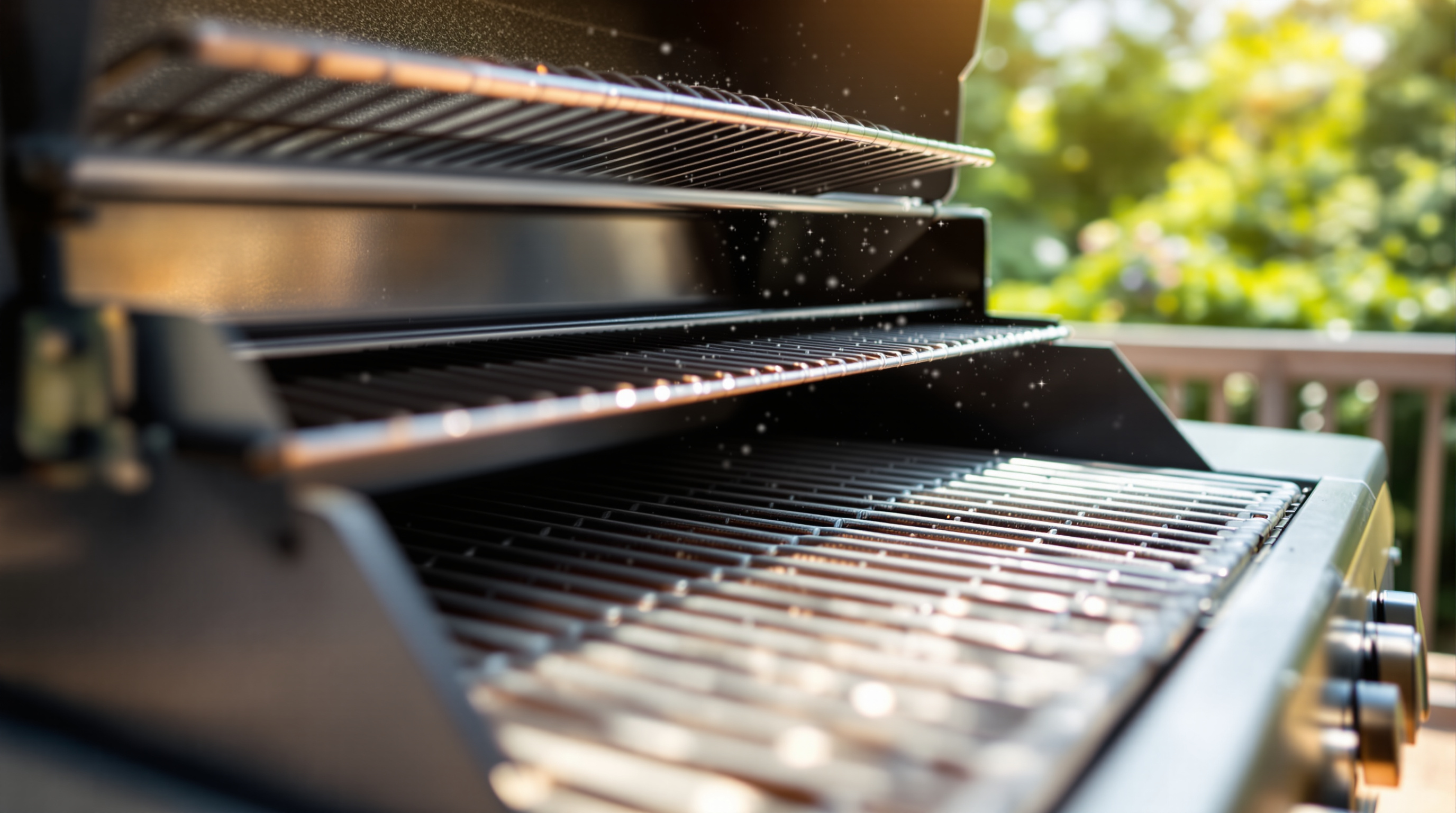
In roughly one-fifth, or 20%, of grill fires, NFPA reports that the grill had not been cleaned. Its grilling safety guidance and fire statistics recommend removing grease or fat buildup from the grill and from trays below it. The cleaning advice extends beyond the visible cooking surface.
The statistic describes a condition reported in those fires. It does not tell you the chance that your own grill will catch fire, or promise that a particular cleaning tool will prevent one. Treat it as a reason to include the grill and the trays below it in your cleaning routine.
For the separate technique questions about cleaning a grate with a block, see the grill cleaning block usage tips. Cleaning technique and the broader fire-safety routine belong alongside each other; neither page turns a cleaning product into a fire-prevention guarantee.
Where to Put the Grill
NFPA advises placing a grill well away from the home and deck railings, and out from under eaves and overhanging branches. Nearly one-quarter of grill structure fires started on an exterior balcony or open porch in its 2020-2024 annual averages. That figure concerns structure fires, rather than all grill fires.
NFPA also calls for keeping children and pets at least three feet away from the grilling area. These are two separate checks: consider the grill's position relative to the building and overhead branches, then consider the space around it while people are nearby. The three-foot guidance concerns children and pets; it is not a stated building-clearance measurement.
Gas Grill Checks
For propane grills, NFPA advises checking the gas tank for leaks before use in the months ahead. It also says the gas grill lid should always be open before lighting. Put both checks into the preparation for a cook, rather than relying only on a clean grate.
Leaks or breaks were primarily a problem with gas grills in NFPA's figures. They caused 6% of gas grill structure fires and 13% of outside gas grill fires. Keep those percentages with their stated fire categories; they are not percentages of all gas grills, and they do not describe how often a tank leaks.
Charcoal Habits
If starter fluid is used, NFPA says to use only charcoal starter fluid. Never add charcoal fluid or any other flammable liquid to the fire. The instruction applies to an existing fire, even if the cook is tempted to add more liquid to get it going.
NFPA's supervision advice applies while the grill is in use: never leave it unattended. Keep that habit together with the three-foot space for children and pets. Planning a cook includes planning to stay with the grill, rather than treating lighting it as the end of the safety routine.
After the Cook
NFPA advises letting coals cool completely before disposing of them in a metal container. The sequence matters: complete cooling comes before disposal. Its guidance does not give a single cooling time to apply to every cook, so do not replace "cool completely" with a fixed number of minutes.
Before the next session, return to the same checks: grease and fat buildup, the grill's position, the people around it and the lighting guidance for its fuel. The quick grill tips bring these reminders into the wider cooking routine.